
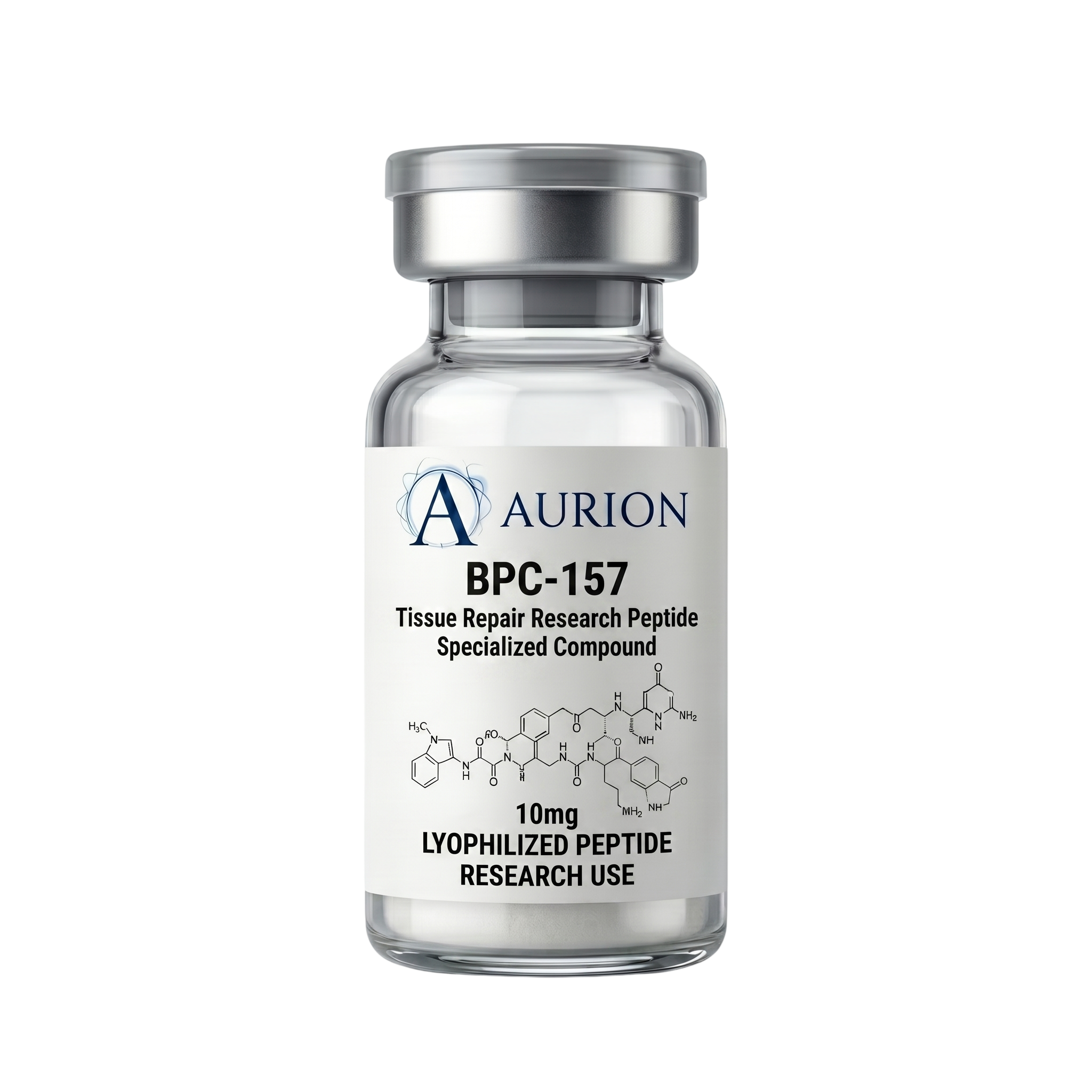
BPC-157 — Tissue Repair Research Peptide
Product Overview
BPC-157 (Body Protection Compound-157) is a laboratory-grade synthetic peptide consisting of fifteen amino acids. Derived from a protective protein sequence naturally found in gastric juice, BPC-157 has become one of the most extensively studied peptides in tissue repair and regenerative research.
Researchers investigate BPC-157 for its potential involvement in cellular recovery pathways, angiogenesis mechanisms, connective tissue studies, and gastrointestinal research models. Its broad range of research applications has made it a prominent compound in regenerative science.
Connective Tissue Research
BPC-157 is frequently utilized in laboratory studies examining tendon, ligament, muscle, and connective tissue repair pathways. Researchers investigate how the peptide interacts with biological signaling mechanisms associated with tissue recovery.
Angiogenesis & Cellular Signaling
The compound is extensively studied for its potential role in angiogenesis-related pathways and cellular communication systems involved in tissue maintenance and regeneration.
Gastrointestinal Research Applications
Because BPC-157 originates from a gastric protein sequence, researchers continue investigating its interaction with gastrointestinal tissues and digestive system research models.
Research Applications
- Connective tissue studies
- Tendon research
- Ligament pathway investigations
- Muscle recovery studies
- Cellular regeneration research
- Angiogenesis investigations
- Gastrointestinal pathway analysis
- Wound healing mechanism research
Product Specifications
- Purity: ≥99%
- Lyophilized peptide powder
- Third-party laboratory tested
- Research grade quality
- Refrigerated storage recommended
- Research use only
For laboratory research only. Not for human or animal consumption.
Reviews
There are no reviews yet.